A foundational guide to walks with a reactive dog
 Dawn Allen
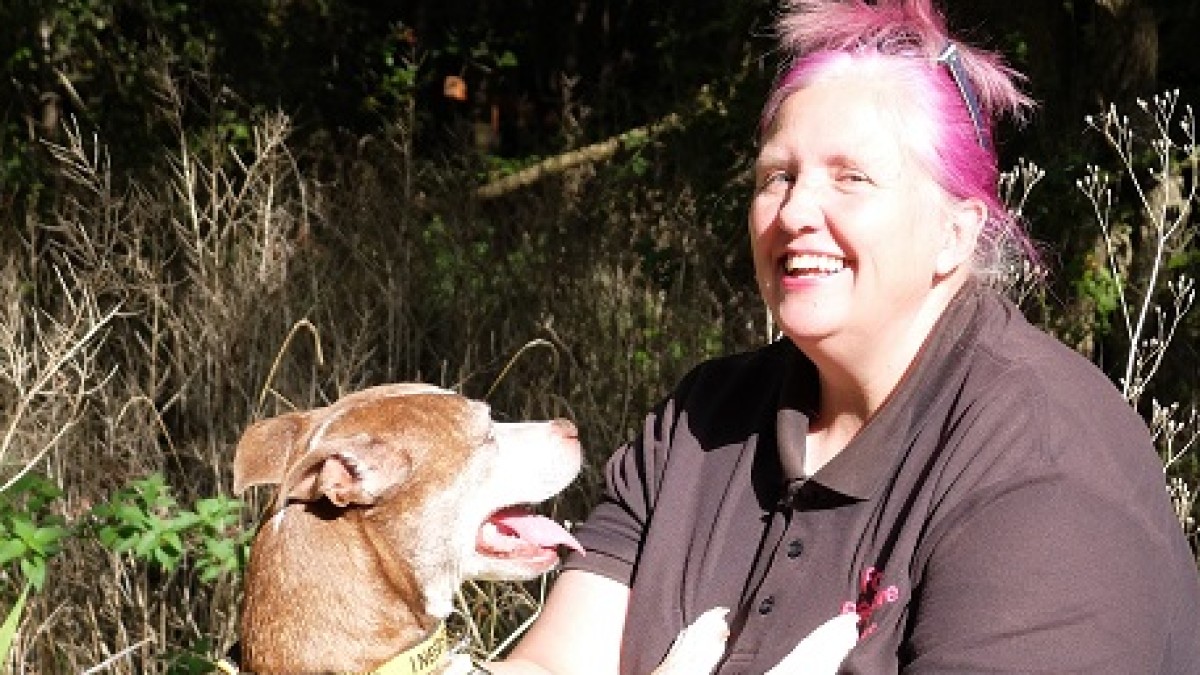
A helpful guide for people that struggle with their dogs behaviour on walks
A Foundational guide to walking with a reactive dog (without making things worse)
You are not alone. These were the kind words I found really helpful when I was struggling with my newly adopted rescue dog and again when I thought I had adopted a puppy that I thought was going to be a blank canvas.
If you are walking a dog with big or significant reactions you’ve probably already experienced one of the most stressful moments that can be experienced, an off lead dog running straight towards you while the owner yells out ‘It’s okay, he’s friendly’.
You have your dog on lead, you’ve chosen a quieter walk with the intention of having a relaxed walk. What happens next?
The heart rate increases, you may be holding your breath, muscles tighten, the nervous system may go into fight, flight, freeze or fiddle about.
Your dog has a reaction to the off lead dog, which might be to freeze and plant, grumble and growl or a lunge and rapid barking and pulling. All pretty unpleasant to experience for you and your dog.
When those reactions happen we can feel judged, embarrassed, frustrated, overwhelmed or frankly, scared.
These emotions and responses can often be compounded if the guardian of the other dog has a judgemental, blaming, shaming or aggressive response.
Off lead, unskilled dogs are becoming more frequent experiences for many people just trying to enjoy a relaxing walk with their dog.
If this sounds familiar, you’re not alone. You are navigating a challenging and difficult situation and often without enough support.
This foundational guide has been created to help you develop a deeper understanding of what walking with a dog that has big emotions may involve, why it feels so hard and how to make safer, calmer choices without making things worse.
What does ‘Reactive’ mean?
Reactive behaviour doesn't always equal aggression. It is often a response to feeling overwhelmed and unable to cope.
Reactive Responses include excessive barking, lunging, freezing, planting, growling, snapping, extreme whining or even screaming when the dog sees or hears:
! Other dogs
! People
! Bikes, runners, vehicles
! Unexpected approaches
Big and significant reactions often stem from fear, frustration, previous experiences or feeling unable to get away and create distance which is why some walks can feel intense and challenging for you and your dog.
Why Walks can be So Hard for Reactive Dogs
Walks can include a lot of emotions and a feeling of pressure in many cases:
# Close proximity to triggers
# Tension on the lead and limited or restricted movement
# Unpredictable environments
# Social expectations from other people
Add an off lead dog with no recall into the mix and suddenly you and your dog have no control over the other dog and no escape.
This is one of the biggest reasons reactivity escalates on walks. Not because your dog is ‘bad’, ‘naughty’ or ‘stupid’, but because the situation is too overwhelming to cope with.
The lead isn’t always the problem, it’s often the environment.
Many guardians are told that walking a dog on lead is the problem and that it is causing the reactive behaviour. This simply isn’t true in all cases.
Leads are a way to provide safety and security. The lead can help prevent the risk of accidents, protect space and keep everyone safe, especially when an unfamiliar dog makes an inappropriate approach.
The true issue is often:
Dogs making a fast or close approach without consent
People ignoring or minimising concerns and risks
A lack of distance, space and choice
For a dog that needs space, for whatever reason, an off-lead dog rushing over can feel threatening, even if the other dog is ‘friendly’.
You don’t know that dog, your dog doesn’t know that dog. You don’t know how ‘friendly’ that dog is and often the guardian of the ‘friendly’ dog doesn’t know how their dog or your dog will respond to each other.
What Safe Walks Mean
Safe walks don’t mean perfect behaviour, no reactions or isolation.
Safe walks mean:
Enjoying quieter routes or times
Advocating for your dogs space
Reducing risk by creating calm with distance
Getting out of and away from situations before they escalate
A safe walk might be a shorter walk. It might include turning around and changing direction. It might appear to be boring to other people but it is incredibly important to protect your own and your dogs emotional well being and that includes feeling safe.
What to Do When an Off-Lead Dog Approaches
This is one of the most asked questions I hear and there’s no magic wand or one single answer but there are safe strategies you can try out and implement.
- Increase distance as early as possible
- Focus on keeping your dog behind you if you can
- Remember to breathe and try to relax your body
- Step calmly between your dog and the approaching dog (IF IT IS SAFE TO DO SO)
- Use clear, simple communication ‘Keep your Dog away’, ‘Call your Dog away’
A cautionary note here. You and your dog are individual and there are many anomalies to consider. You know your dog, your self and when you are in a situation, safety is paramount. The strategies listed are for your consideration and a guide not a must do to do list.
If the other person becomes defensive, rude or aggressive, remember that your priority is your own and your dog's safety. Right now, at this moment, it isn’t about their opinion or justification.
Walking with a dog that has significant reactions is a skill.
Learning how to walk with a dog that has big reactions takes time. It includes planning, observation and lots of patience, compassion and resilience.
You are not making things worse by using a lead, choosing quieter routes or spaces where there are less dogs and people around. You are being responsible and flexible while adapting your walks to suit your dogs current needs.
Calm, safe, relaxed walks can be developed and discovered over time, one step and one walk at a time and you don’t have to do it alone.
If your walks feel stressful, unsafe or worrying, support can make a big difference. Experienced guidance can help keep you and your dog safe.